Kateryna Aliinyk
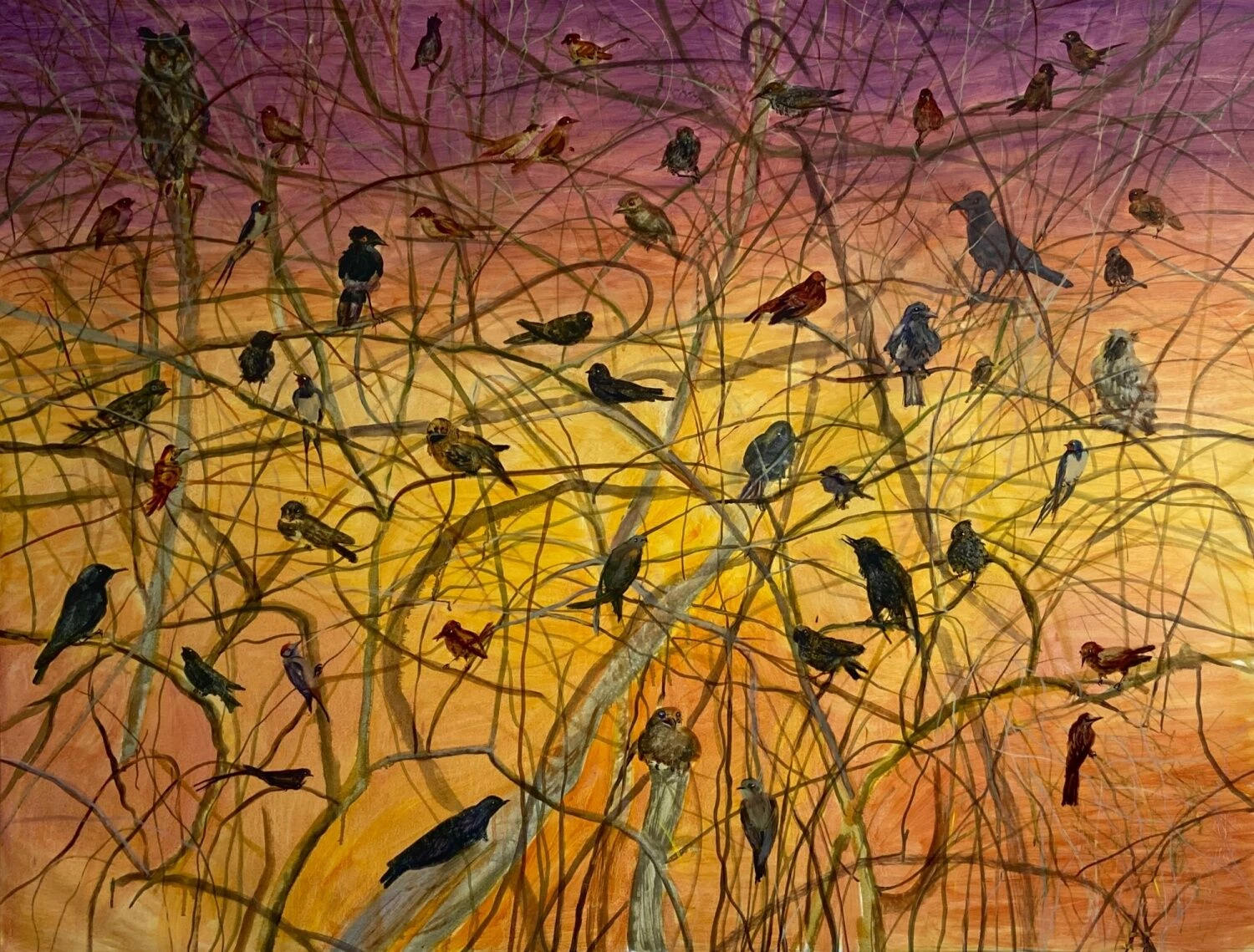
‘Pregnant Eyes’, 2025, oil on canvas, 164 x 212 cm. Courtesy of the artist and Jednostka Gallery.
The work was created with the support of Werkleitz and for the Planetary Peasants festival
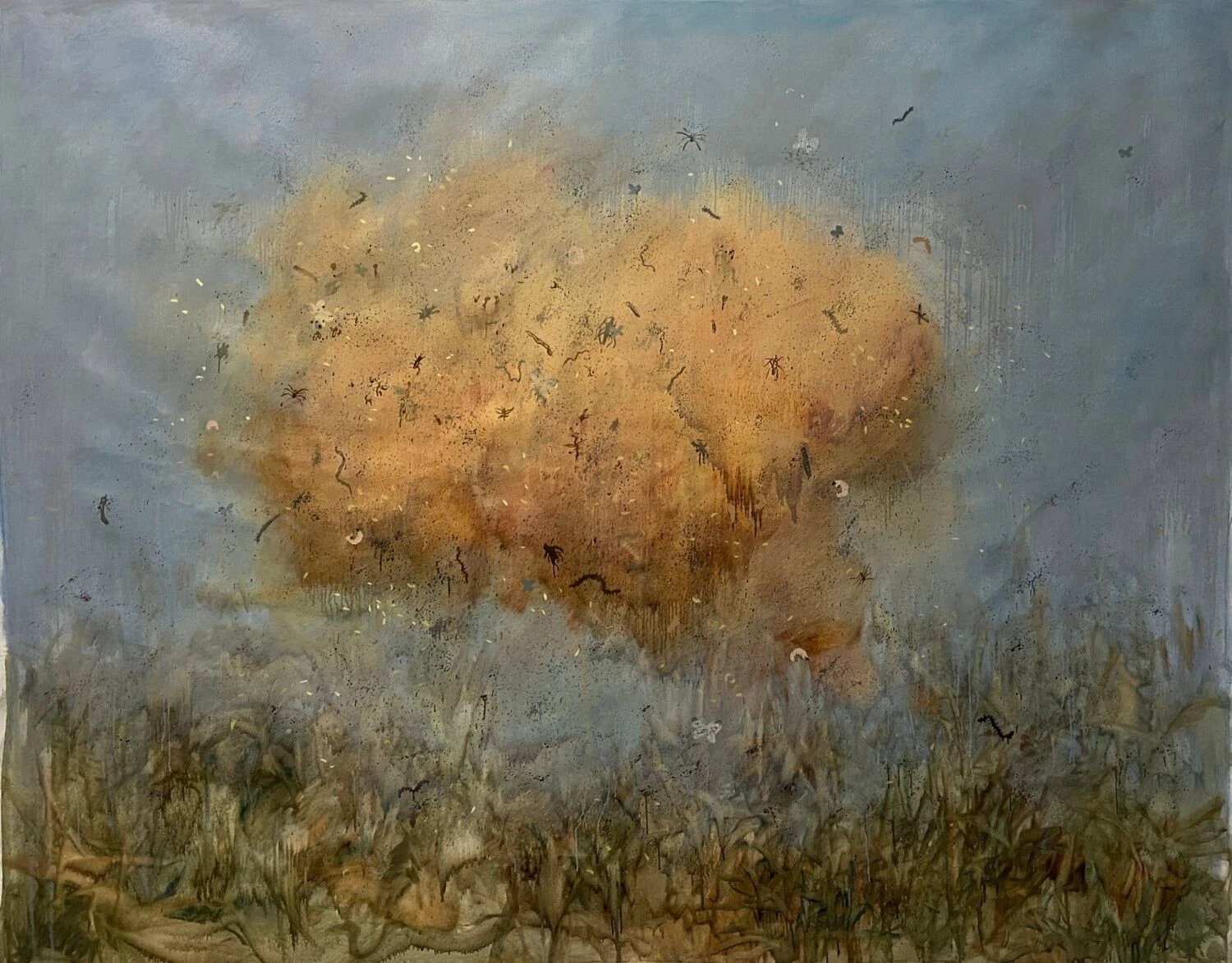
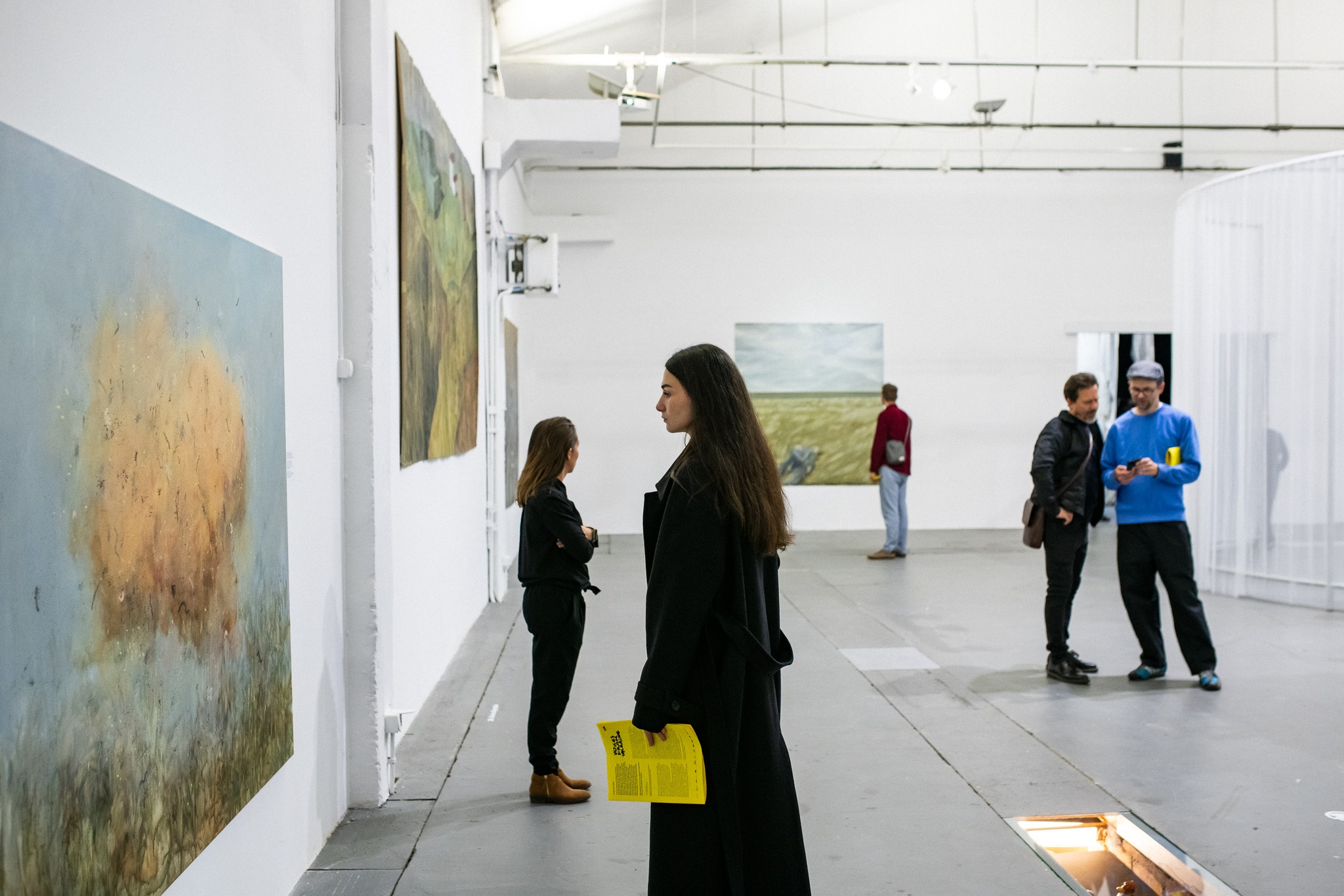
‘Skies Cannot Always Be Blue’, 2024, oil on canvas, 220 x 175 cm. Courtesy of the artist and Jednostka Gallery. The work was created with the support of Werkleitz and for the Planetary Peasants festival
The artist’s primary media are painting and text. The central theme Kateryna explores is a landscape marked by war and occupation, perceived through images of nature in a non-anthropocentric perspective. She spent her childhood in Luhansk, which has been under russian occupation since 2014. The distinctive landscape of this region, very different from that of other parts of Ukraine, is the main protagonist of Kateryna’s work, as she interprets ‘the landscape not as a background but as an action’. This shift in the meanings of her attitude to the landscape was the starting point of her artistic practice. Kateryna’s landscapes are not depictions of specific places; rather, they are woven from memories and single images recalled from memory and photographs in such a way as to evoke a sense of certain things, places, villages and the region.
Kateryna searches for different ways to speak of the presence of war, violence and the catastrophe they bring through images of nature, in particular through the theme of abundance and excess. Terror, which has seeped into places where it is not visible, manifests itself at the level of a fundamental disorder of the world, which also leaves its mark on our perception of nature. Reflecting on what frightens us in nature, on what we perceive as terrifying, Kateryna turns to the image of insects swarming like clouds above the earth. In the painting ‘Skies Cannot Always Be Blue’, she deliberately places together swarms of insects that in nature inhabit different environments. She employs a similar technique of oversaturation in the work ‘Pregnant Eyes’; within a single pictorial space, she depicts birds that would never meet in nature. Their gaze metaphorically conveys the ‘gaze’ of nature that looks back at us. In this way, Kateryna addresses violence that has overstepped the usual boundaries of the human world and brought about the complete destruction of foundations and the disruption of the global order—an order that exists in nature, that seemed independent of humankind and eternal.