Sevilâ Nariman-qızı
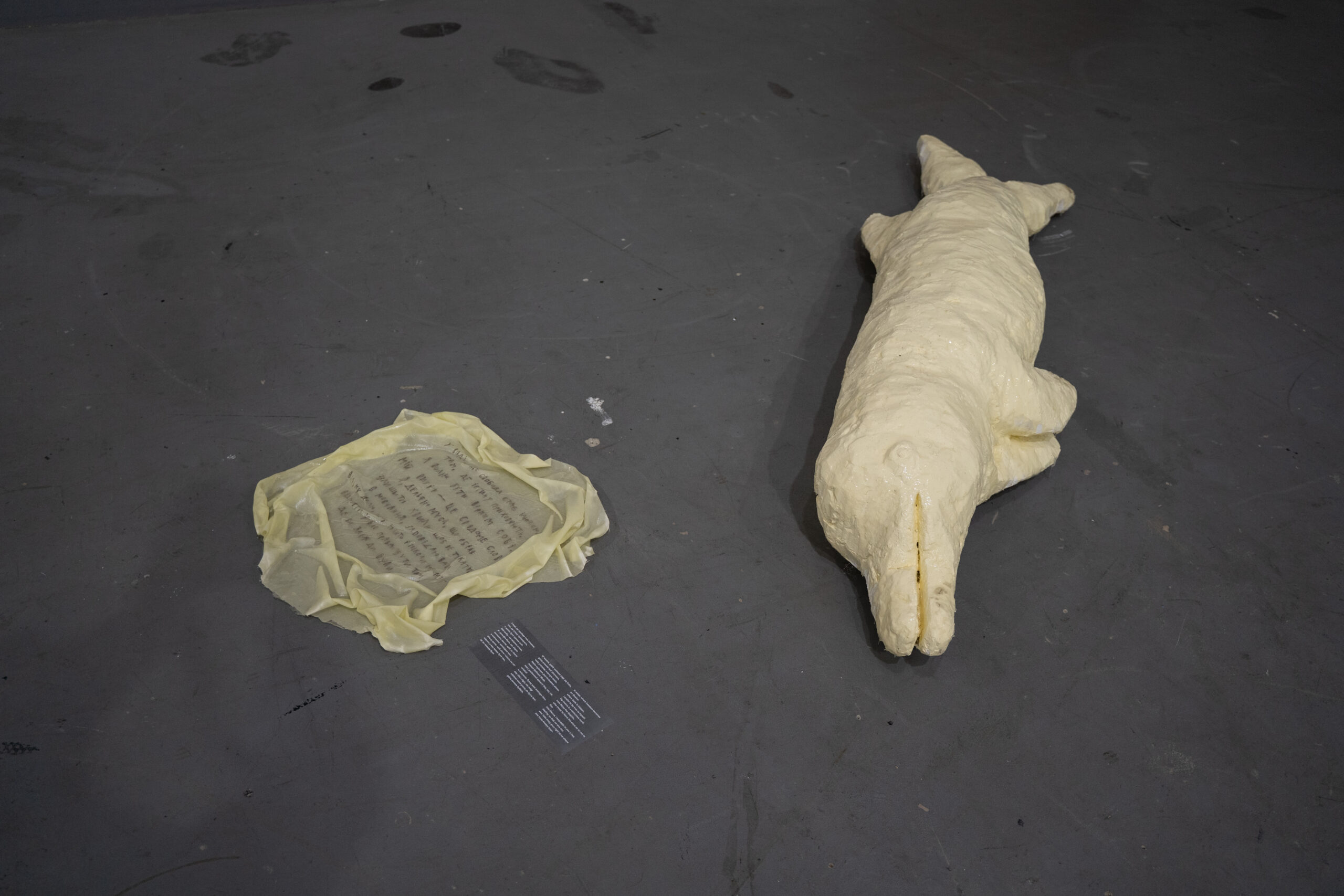
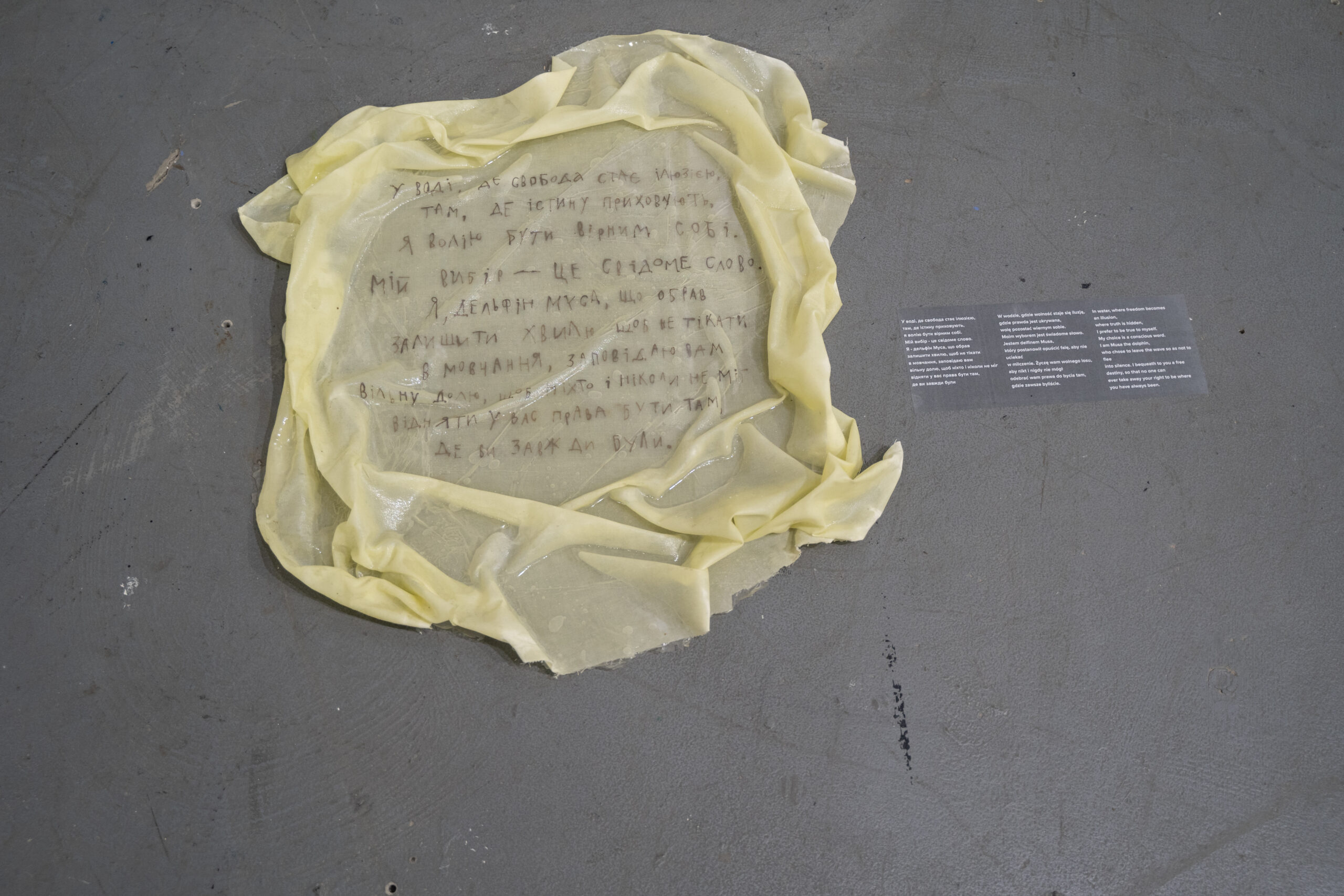
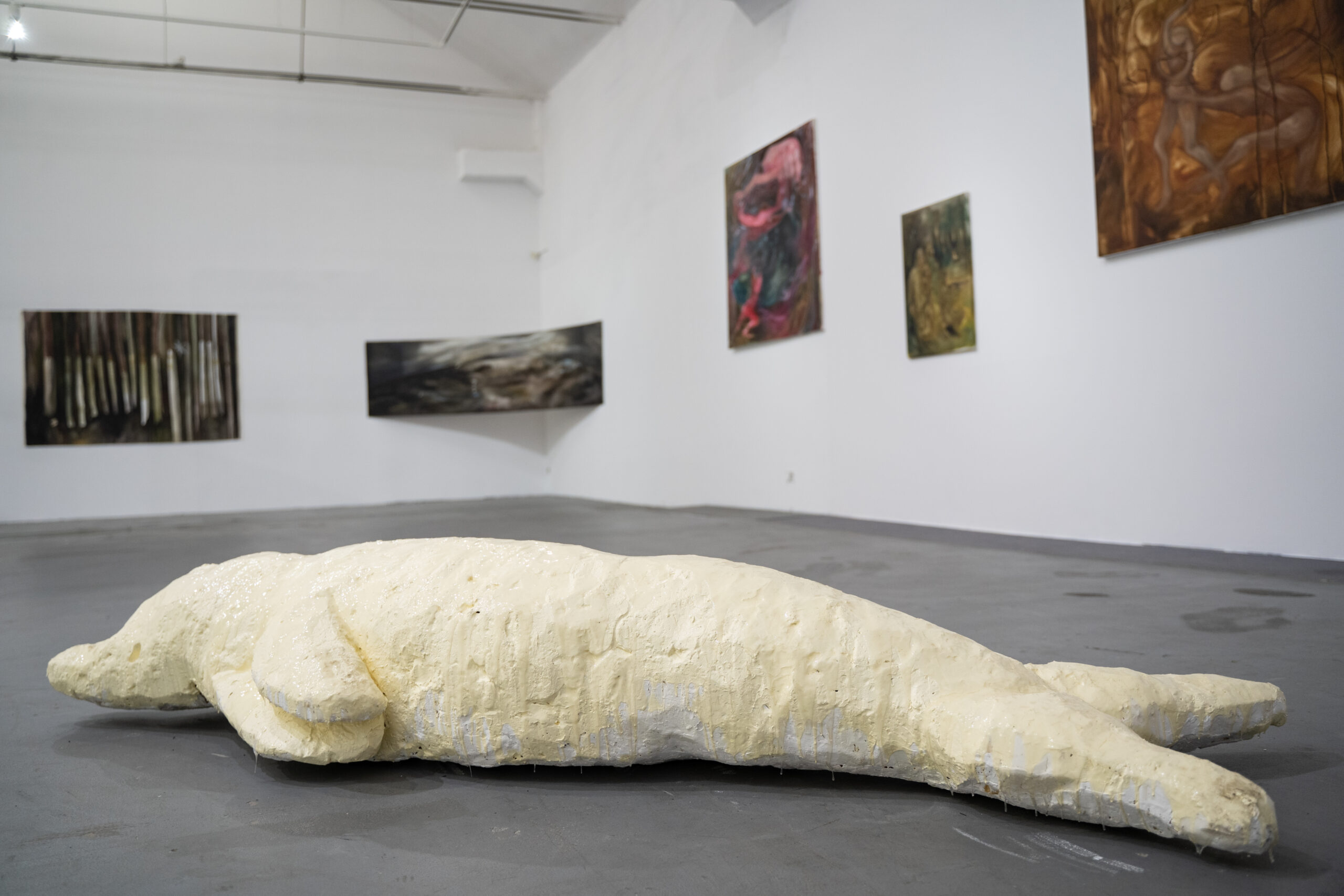
‘Testament’, 2024, objects, author’s technique
Sevilâ identifies herself as a multidisciplinary artist of Crimean Tatar origin. Her practice is founded on interaction with what the artist calls ‘Qırım tatar world’; her artistic strategies aim to expose and undermine colonial logic, to explore tradition and memory as fluid matter and to seek forms of their transformation. In her works, Sevilâ forges connections between the past and possible future, balancing between facts and artistic fiction.
The work ‘Testament’ is also a critique of colonial relations. It is targeted at the russian invaders, but Sevilâ also addresses Ukrainians who have inherited a Soviet colonial mindset and who treat Crimea as a valuable resource. The artist refers to two tragic stories related to the colonial situation on the peninsula—a personal one from 2021 and an instance of desperate resistance from 1978. During a visit to her homeland four years ago, Sevilâ found dead dolphins on the shoreline. The mass die-off of dolphins and many other species of Crimean flora and fauna is caused by regarding nature as a resource. Since the full-scale invasion, the ecological situation in the Black Sea and along its shores has rapidly deteriorated—ecosystems are being destroyed, species are dying out, and the environment is suffering catastrophic pollution. Nature is suffering, too. The name of the dolphin in the artist’s installation, ‘Musa’, alludes to the tragic story of Musa Mamut, a Crimean Tatar, who, after persecution by Soviet authorities for returning to his homeland, self-immolated. Facing oppression and persecution and deprived of the possibility of living freely in his own country, Musa chose the path of a free man and took his own life in his homeland.
By interweaving these two stories, Sevilâ suggests that one may be heard only through the performance of a radical act, that is, a voluntarily chosen death.