Yana Kononova
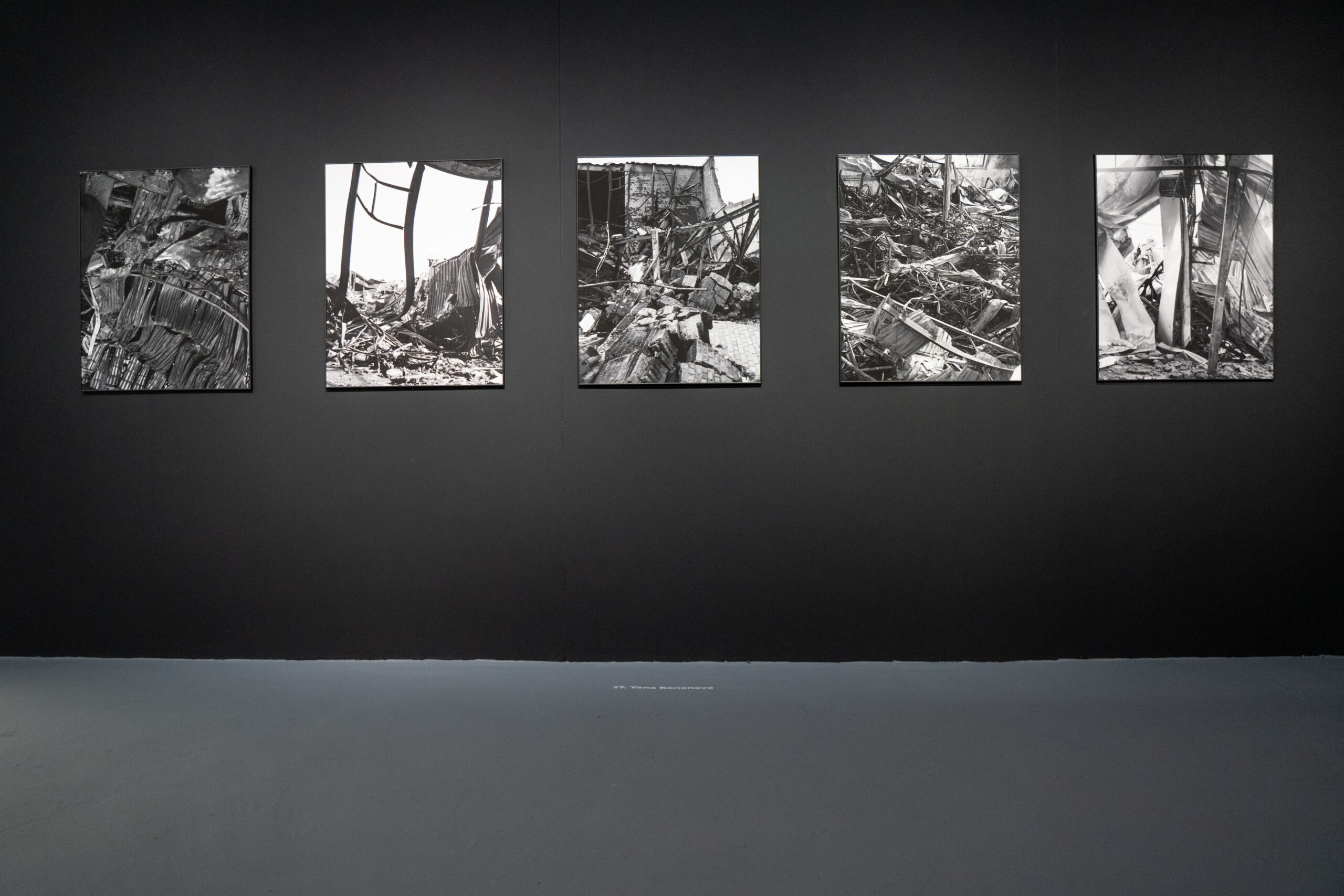
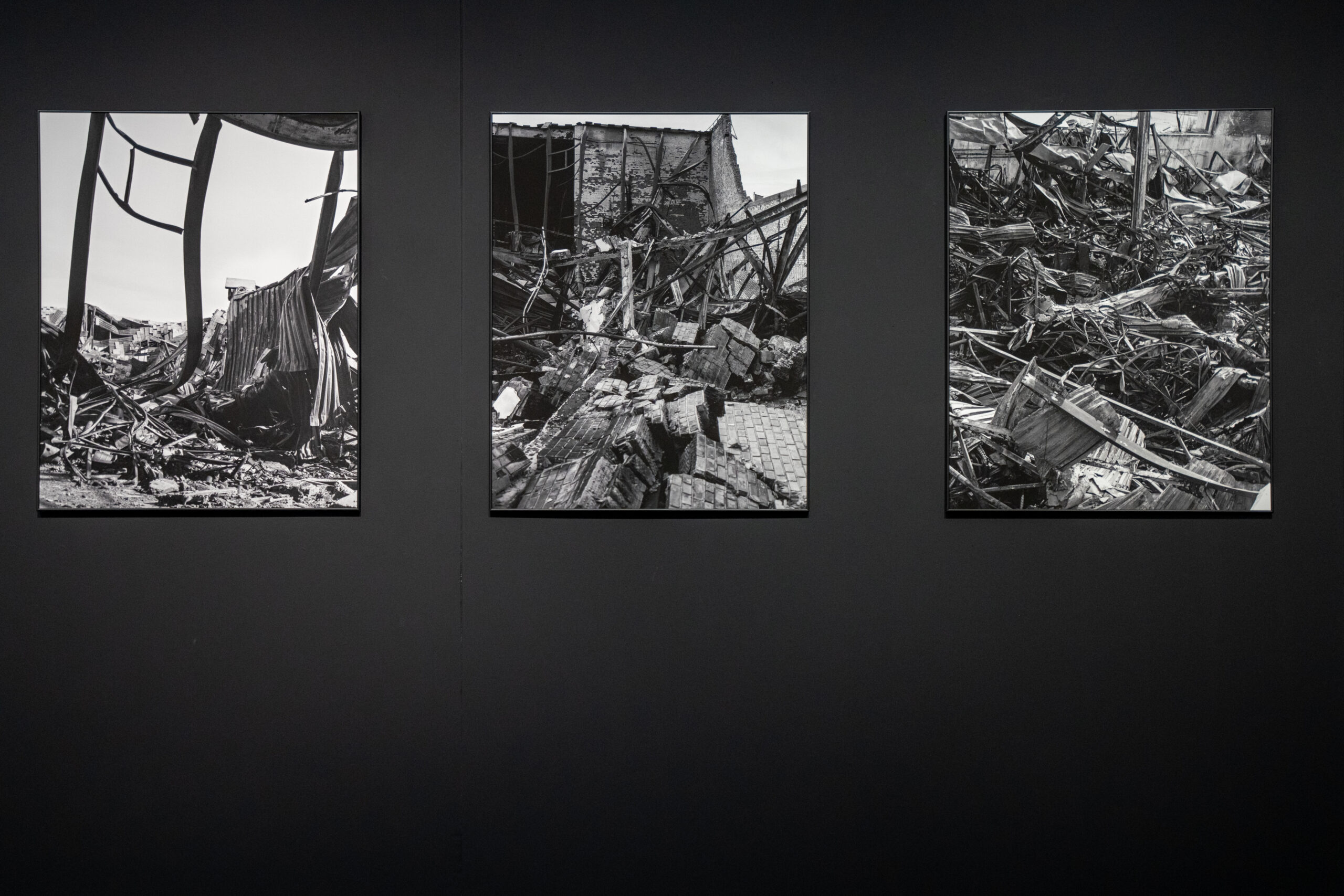
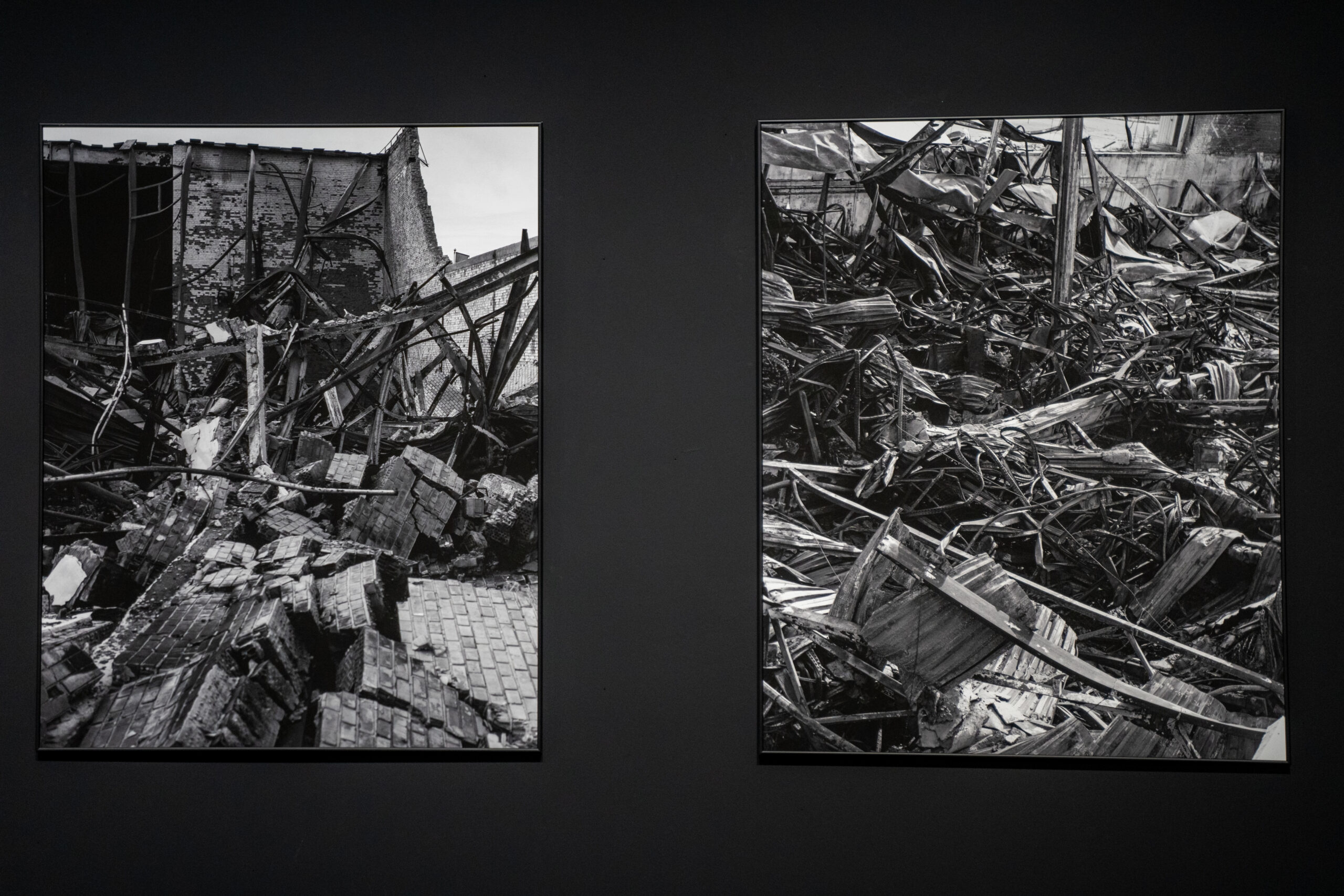
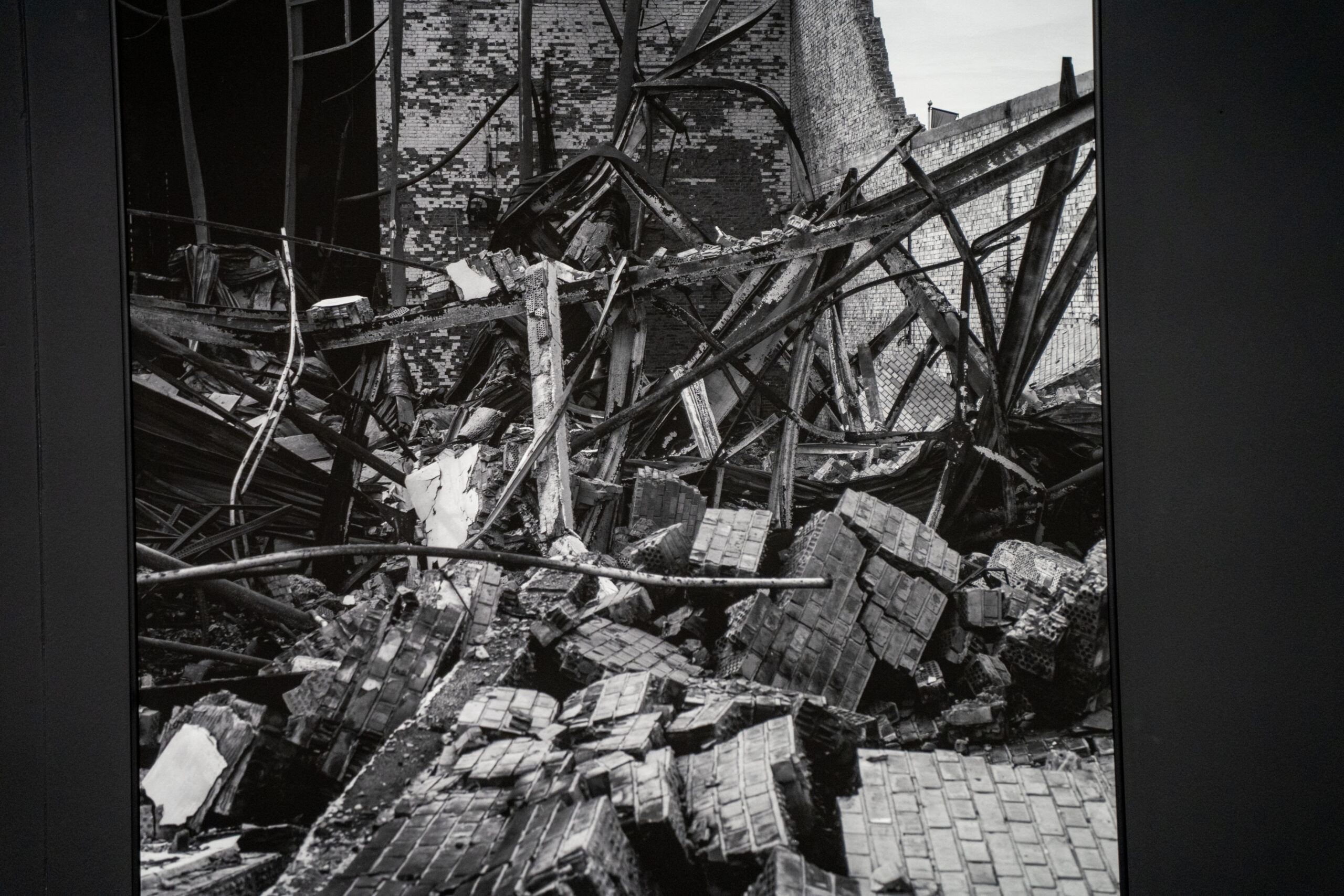
‘X-Scapes No. 59-14’, 2022, archival black-and-white matte pigment print from a 6 x 7 cm negative, composite panel, polished aluminium, 5 x 92 x 74 cm
Yana’s practice is rooted in working with the camera and the materiality of the photographic process; it also incorporates text and advanced printing techniques. Her work combines aesthetic and theoretical research, approaching landscape as a historical process and engaging with its sensitivities, with a focus on an ecocritical and speculative approach to terrain. The artist explores the tactile qualities of the photographic image, working on the threshold between material process and visual representation. Her practice draws on contemporary philosophical perspectives, in particular from the theory-fiction genre, which shape her strategies of working with landscape.
Since the beginning of the full-scale invasion, Yana has been documenting a dystopian image of contemporaneity and the experience of war—evidence of war crimes, destruction and the catastrophic consequences of warfare. Captured with a medium-format camera on black-and-white film, the reality in her photographs is perceived from a certain distance, almost abstractly—‘shifted’ into a spectrum in which, beyond the debris and the stark confirmation of catastrophe, an event can be spotted. From a habitual way of seeing, it shifts into a ‘timeless’ or, in a sense, ‘post-historical’ register; thanks to that, what reality conceals in its immediacy is revealed in the photographs. Yana positions her work as speculation, as searching for where the landscape becomes the main protagonist. She deliberately avoids depicting the human figure in the frame, since its presence immediately imposes a stereotypical view of landscape rooted in the tradition of Romanticism. Yet for Yana, the Romantic category of the sublime is significant. Reinterpreted and rethought, the concept of the sublime continues to be relevant in describing her practice, even within today’s catastrophic reality. Works from the ‘X-Scapes №59-14’ series also engage with the question of the sublime, but in the absence of the human figure in the frame, they acquire a different, non-anthropocentric dimension.